
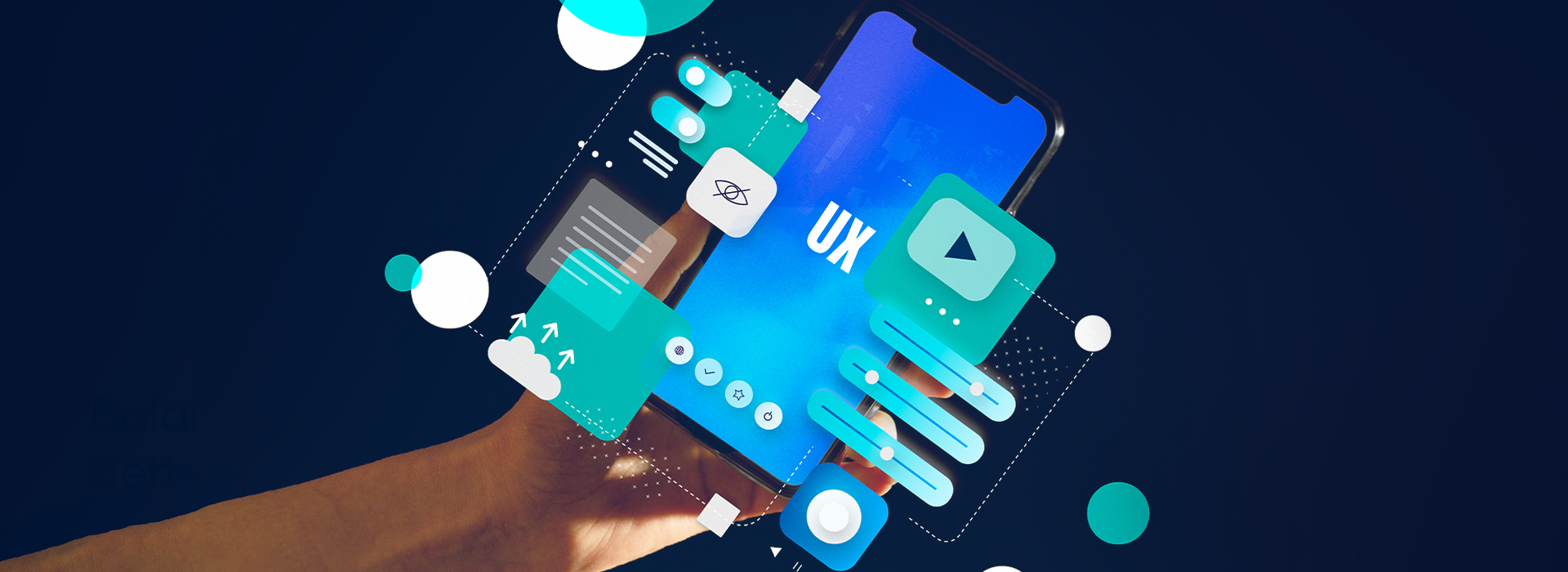
UX designers or development team members, both carry the tension; the tension of creating a product that is both user-friendly and attractive while keeping the creativity within the technical constraints. UX designers are pushing for delightful, frictionless experiences, and developers are flagging system limitations, legacy debt, or performance bottlenecks. On one side, there is the effort to build interfaces that make users happy with appealing visuals and flow. On the other hand, the engineers strive to make the vision of designers real within the technical limitations without compromising on the quality, user-friendliness, and scalability.
This is the hard reality in businesses that aim to build user-centered products. When the balance between both teams is lost, it directly impacts product quality, user satisfaction, and business outcomes. That’s why balancing UX design with technical constraints is not a “nice to have”; it is the cornerstone of successful product development. When teams navigate trade-offs strategically, products become usable, reliable, and scalable while still keeping users at the center.
This blog explores how to bridge the gap between UX goals and technical realities, highlighting common pain points, practical strategies, and tips.
UX vs. Technical Limitations: Common Pain Points in Product Design
UX designers always try to create engaging and user-friendly experiences through attractive designs in product development. Yet, there are some technical constraints that create friction between designers’ choices and what is realistically feasible. These constraints and limitations affect design aspiration. From system capabilities and legacy infrastructure to performance and resource restrictions, the limitations are many. With these constraints, products may lose their quality and user-friendliness, as well as reduce the efficiency of product development. You need to understand the product design constraints and pain points in it; it can be helpful for you and your product development team to overcome the constraints effectively and generate and design experiences that balance creativity with technical practicality.
Common Pain Points:
- Misalignment between design and technical feasibility:
Some animations or micro-interactions and components that rose in designers’ minds may not be afforded by the technology stack and can lead to extra work unless both teams discuss them well. - Outdated systems and technical debt:
Integrating modern UX patterns into outdated platforms or frameworks is a challenge for staying updated, and it also resists modern design implementation. - Performance constraints:
UX designs with heavy graphics or animations slow down applications. This negatively impacts overall user satisfaction due to increased loading time of the website or application, creating frustration for end users. - Communication gaps between designers and developers:
If the designer and engineers, or developers, do not communicate earlier, there will be many misunderstandings regarding the possibilities and limitations of current technology, extra work, and mistakes. - Resource constraints such as time, budget, and skills:
Time, budgets, and skills are important factors in creating the best product. So, due to tight deadlines, limited budgets, or a lack of specialized development skills, designers may be forced to compromise on their work.
Understanding the Conflict: UX and Technology Constraints
UX design goals and technical soundness are the two powerful requirements in product development. Not just as two components, but with the right balance, they help create great products. But these two powerful forces, UX goals and technical feasibility, often conflict, as UX design focuses on products being usable and engaging, while technical teams have limitations of existing systems and their performance. Technical teams must adapt to meet design requirements, while UX design teams need to compromise on creativity to fit technical limits. This is the reality that every product strategy must navigate trade-offs. By understanding these competing priorities, product teams can build solutions that are both user-friendly and technically sound.
UX Goals in Product Design:
- User-friendliness: Create product interfaces that are intuitive, attractive, and easy to understand and navigate. Thus, minimize the learning curve for users.
- Delight: Along with being functional, create designs of products that are engaging and emotionally connect with users. Use micro-interactions, animations, or sleek visuals to meet this.
- Accessibility: A product that can be accessible to all types of people, including users with disabilities, ensuring inclusivity across devices and environments.
Technical Constraints in Product Development:
- Performance: Visuals, animations, or complex interactions cause longer loading times and make applications slow. This only creates frustration in the audience instead of a good user experience.
- Scalability: Without proper technical planning, designs that work for a small test group may fail under high traffic or data loads without robust technical planning.
- Outdated systems: Outdated infrastructure or accumulated technical debt may prevent modern UX patterns from being fully realized.
- Feasibility of innovation: Advanced or modern design ideas may require frameworks, APIs, or device capabilities that are not readily available.
Balancing UX and Tech for Effective Product Development
To deliver a user-friendly, attractive, and valuable product, the balance between UX design and technical constraints is crucial. It is a strategic choice rather than compromising on the quality in all ways. Rather than compromising, treat it as a prioritization. Prioritize communication between the teams, and choose the solution that offers the most value given time, budget, and system limits. This right balance helps the UX designing team and the technical team develop a product that is easy to use, well-performing, and appealing.
Here are some practical principles to bring balance between UX and technical constraints to build effective products.
- Give priority to user outcomes: Perfect visuals and animations can be appealing, but if they affect the loading time, they are more frustrating than attractive. Then, choosing clarity and speed through better design that does not hurt the load time creates the perfect balance.
- Validate trade-offs with data: Build quick prototypes to test usability, set performance budgets, and measure against metrics such as task completion rate or error rate to make trade-offs evidence-based instead of subjective.
- Ship an MVP, learn, then enhance: Always try to release an MVP (Minimum Viable Product) before launching the main product. Then collect and analyze feedback and performance, and later improve the product quality based on your assessment, and then release the final product.
- Keep design systems and modular architecture: Design systems (standardized UI components) and modular tech architecture (flexible code blocks) make it easier to scale design ideas without overwhelming development, so that your design ambitions stay feasible.
How Creativity and Technical Expertise Shape Product Design
Creativity and technical expertise together contribute to shaping a great product. Let’s explore the outcomes when creativity and technical expertise work together:
- Creativity in UX design: Designers can express their creativity with the perfect balance of UX and technology, which brings intuitive experiences and visually engaging designs.
- Technical expertise in development: Engineers or the technical team translate the visions and ideas of UX designers into reality by balancing the performance and scalability with current tools and infrastructure.
- The collaboration factor: Collaboration and communication between the design team and developers is basic, and with early collaboration, design choices can be easily made that fit with the technical feasibility to avoid extra time and effort.
- Outcome of balance: Products become both delightful and dependable. Users get experiences that feel seamless, and businesses avoid costly rework, ensuring faster delivery and long-term maintainability.
Strategies for UX Design and Development in a Product Development Hub
Here are some strategies to bridge the gap between UX and technical constraints. Apply them within your product development hub to turn obstacles into better outcomes.
1. Start with outcomes and constraints
Define success metrics like conversion, task completion, load time, etc., and list hard constraints such as legacy APIs, regulatory rules, and performance budgets to make trade-offs easier to justify.
2. Prioritize by value × feasibility
Use a combined matrix or augment RICE/Kano with a feasibility score from engineering. Prioritize critical user journeys first; postpone “nice-to-have” flourishes until core paths are stable.
3. Prototype low-fidelity, validate fast
Begin with low-fi flows to validate concepts with users and engineers. Follow with interactive prototypes to reveal hidden technical issues early; this minimizes expensive rework later.
4. Pair design and engineering early and often
Embed engineers in design sprints. Do quick technical spikes or API-contract sessions to surface implementation costs and integration gaps before committing to designs.
5. Invest in design systems & modular architecture
Standardized components, design tokens, and a component library (Storybook-style) reduce handoff friction. This makes ambitious UI consistent and maintainable. Modular front-end/back-end patterns let you iterate parts without rework.
6. Use incremental delivery and feature flags
Ship an MVP or progressively enhance using feature toggles and dark launches. This lets you validate impact in production while rolling back or iterating quickly if constraints bite.
7. Close the loop with metrics
Instrument prototypes and production to measure performance, usability, and business KPIs. Use data to validate trade-offs and feed iterative design cycles.
Practical Tips for Teams to Ensure Seamless UX-Tech Collaboration
Balancing design ambition with technical reality is not just a high-level strategy, it comes down to the daily practices of how teams work together. Even if you are a talented UX designer or an intelligent engineer, your plans will fail unless your teams have sufficient communication. Great product plans may fail if both teams are not aligned throughout the process. Here are some additional user experience best practices and tips for both the UX and development teams to follow, which can help you create workflows where designing and engineering move in harmony so that you can together create products that are both user-friendly and technically sound.
- Regular communication to ensure design–developer syncs to align on goals, catch blockers early, and avoid surprises late in the process. Make sure both people’s opinions are valued equally.
- Always examine technical feasibility as early as possible to understand how much the technology can afford.
- Use tools and frameworks such as Figma, Miro, Jira, and Notion to ensure smooth handoffs and consistency.
- Run early usability tests with prototypes to validate both user experience quality and technical performance.
- Create continuous feedback loops where engineers share performance insights, and designers refine flows based on data.
- Foster cross-learning: designers gain a basic grasp of tech limitations, while developers build empathy for user needs.
- Designers and developers must have a basic grasp of each other’s working limitations and importance.
- Maintain design systems and component libraries to standardize work, reduce rework, and keep teams aligned.
Achieving Business Goals While Ensuring UX
The creativity of the designers and the talent of the engineers come together in a perfect balance to create a great product by keeping users at the center. The product will be user-friendly as well as alluring. It is not just about creating something, but it is all about driving business outcomes. There comes the fulfillment of your business goals.
Connecting business KPIs with UX outcomes is the best practice to make trade-offs clearer and more strategic. Prioritize what drives the most value for users and the business, instead of cutting features blindly to save time, teams. Keep things that can grow your business.
One of the facts that helps a product become better is launching an MVP, gathering user feedback, and gradually improving. So that companies can meet market demands quickly without sacrificing usability, leading to the future growth of the business. This approach creates a feedback loop where business goals are achieved, but not at the cost of frustrating users.
Ultimately, aligning UX and business ensures products are functional, profitable, and meaningful for the users, building long-term loyalty and competitive advantage.
Below are the best practices to achieve business goals while ensuring UX:
- Define clear KPIs: Align UX outcomes with measurable business metrics such as conversion, engagement, and retention.
- Prioritize high-impact features: Focus on features that deliver the most value to both users and the business.
- Use iterative feedback loops: Launch early, gather user insights, and continuously refine both UX and business alignment.
- Balance speed and quality: Deliver on time without sacrificing usability, ensuring long-term satisfaction and loyalty.
Bottom Line
When design and engineering teams collaborate early, respect each other’s perspectives, and validate trade-offs through iterative testing, the result is products that are not only usable but also scalable and sustainable. This alignment directly fuels business outcomes by improving user satisfaction, reducing costly rework, and accelerating time-to-market.
Cross-functional collaboration and continuous feedback loops are the backbone of this balance, ensuring that every decision keeps both users and systems in mind. For product development hubs and companies offering UI/UX services, embedding these practices into everyday workflows can turn friction into innovation and ambition into reality. The products that succeed long-term will be those where creativity and technology move in step, delivering seamless experiences for users and lasting value for businesses.
For organizations looking to overcome these challenges, partnering with the right UI/UX design company can make all the difference. At Weft Technologies, we go beyond surface-level design to provide comprehensive UI/UX services that balance creativity with technical execution. As a trusted UI/UX design services company, we help businesses align user needs with system feasibility, ensuring products are not only engaging but also scalable and sustainable. Partner with us today.

We are here to help you with growth
Contact Our ExpertsLatest Blogs
- The Marketing Funnel Doesn’t End at Your Website Anymore
- Brand Visibility in the Age of AI Search: A Practical Guide for Businesses
- Digital Product Development in 2026: Strategies for Building Products That Actually Succeed
- The AI App Explosion: Why Low-Cost Development Won’t Fix a Broken Business Strategy