
Some company software seems to get outdated the moment it’s launched.
It’s a common problem we come across every now and then, and it stems from an outdated way of thinking. For years, we’ve treated software like a one-time project with a finish line, which basically means that when it’s done, we move on to another.
But was it the right approach to custom software development?
Experts say this approach could be a recipe for a product that’s obsolete before it can even make an impact.
And it opened the door for more thought and discussions, which led to the practice of a far more convenient and favorable development approach.
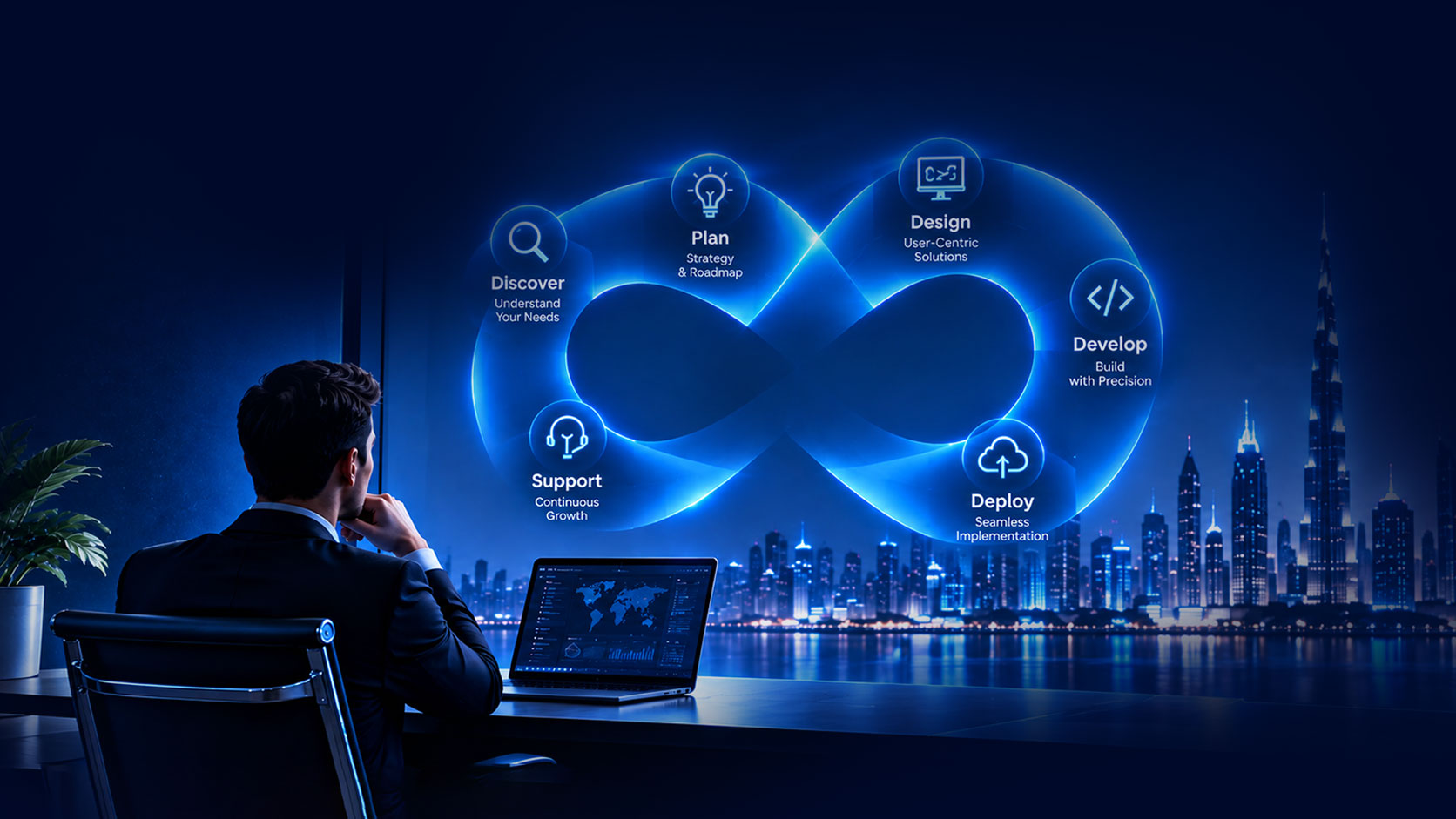
The most successful companies are making use of this approach: they’re treating their custom software not as a project, but as a living, evolving product.
Let’s find out why and how!
The Problem with Treating Software Like a One-Time Project
Considering software as a one-time project is a bit like building a house and never really planning to renovate, that is, leaving no room for any change in material, texture, or tone. It works for a while, may be appreciated, accepted, and even celebrated, but eventually, the roof leaks, the paint peels, and the style becomes horribly outdated.
Similarly, the traditional approach may also fall short due to the following problems:
- It’s too rigid. The traditional approach locks you into a plan from day one. If the market changes or a better idea comes along six months into development, it’s often too expensive and complicated to make a change, and for the most part, the product might end up being launched as an outdated version itself.
- It leaves a mess behind. Once the project is “done,” the development team walks away, taking with them the knowledge, experience, and history of multiple errors they committed along the way and the multiple corrections they came up with on sleepless nights, leaving a new team to manage and maintain something they didn’t build, know, or work with. This can make fixing bugs slow and adding new features a total nightmare.
- It loses sight of the user. In a project mindset, success is just about hitting a deadline and staying on budget. The bigger question—”Is this actually solving a problem for our users?”—gets lost in the shuffle, mainly when there is no space or opportunity for any kind of feedback loop.
Why the Project Approach No Longer Works
Traditionally, software development for enterprises was project-centric in nature. A project had a clear start and end date, a fixed budget, and a set of deliverables, which a company usually sticks to. The primary goal here was completion, not continuous evolution or betterment of the software.
While this approach may have worked well years ago, in an era of slower change and lesser expectations, the rapidly moving pace of technology, evolving business processes, the booming social media culture, and the shifting customer expectations that came with it have exposed the limitations of a project mindset one by one.
The project-based approach primarily assumes that requirements always remain static and that once the product is ready and launched, it can somehow simply be maintained just like that without further interventions or any follow-up work.
But in reality, the digital landscape is in constant motion—to be more precise, the algorithms change every minute, new competitors emerge every other day, and customer preferences evolve overnight. And when teams operate within rigid project boundaries like the one mentioned earlier, they simply struggle to keep up with the growing or changing consumer demands and expectations, leading to outdated systems and missed opportunities for innovation and success.
Moreover, a project mindset tends to focus on output rather than outcomes. And therefore, treating software as something with an end date is no longer sustainable in this digital ecosystem.
Project vs. Product Mindset – Comparison Table
| Aspect | Project Mindset | Product Mindset |
| Goal | Completion & delivery | Continuous improvement & value |
| Duration | Finite (start & end) | Ongoing (lifecycle-based) |
| Feedback | Minimal or post-launch | Continuous & iterative |
| Ownership | Disbanded after delivery | Dedicated, long-term teams |
| ROI Focus | Short-term | Long-term, evolving |
| Adaptability | Low, rigid structure | High, flexible & agile |
Limitations of the Traditional Project Approach
While the project-centric model of software development once worked well for predictable business environments, it struggles miserably to keep pace with today’s rapidly evolving technological and market demands.
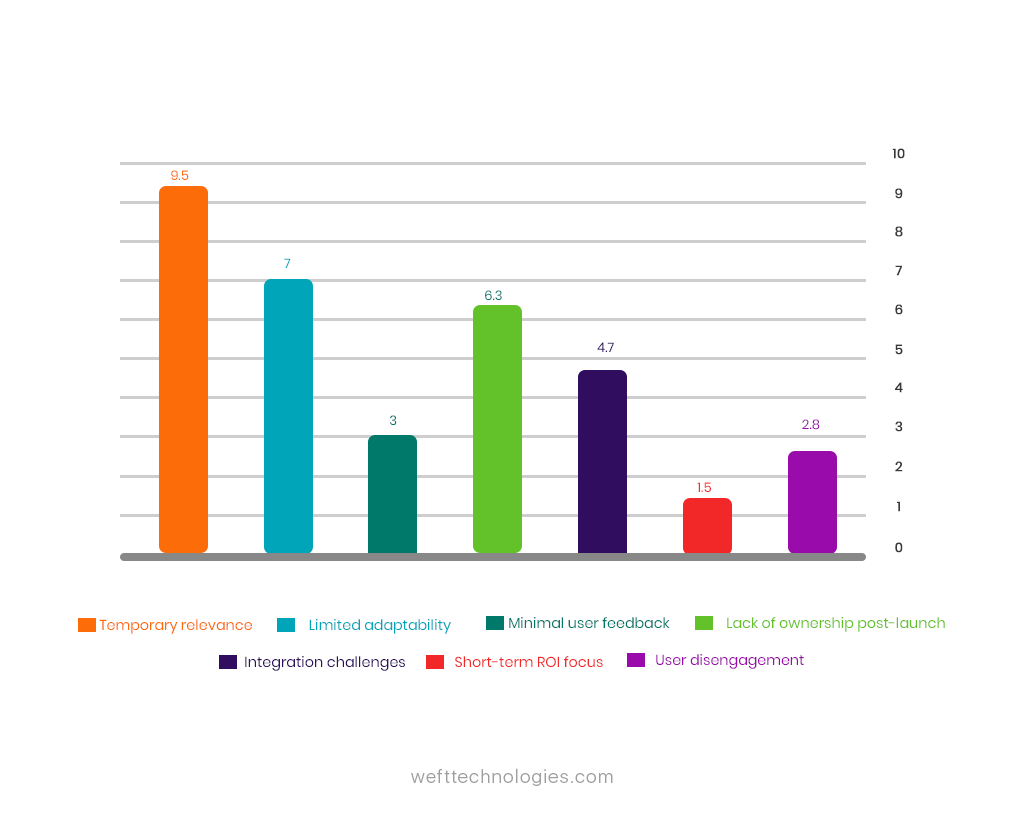
Several recurring challenges make this approach increasingly inefficient and unsustainable:
- Temporary relevance: A one-time delivery model often results in software that quickly becomes outdated once new needs or technologies emerge, and this could happen at any time, from a few hours after the launch to a year or a couple of years.
- Limited adaptability: Rigid project scopes, fixed budgets, and strict timelines leave little to no room to accommodate changing business goals or market shifts that happen overnight.
- Minimal user feedback: Since products are typically delivered as final versions, there’s minimal opportunity for ongoing user input or iterative improvement based on that.
- Resource inefficiency: Teams often disband after project completion, leading to a loss of institutional knowledge and hindering long-term development continuity.
- Lack of ownership post-launch: Once the project concludes, maintenance becomes reactive rather than proactive, reducing any kind of accountability and long-term product health.
- Integration challenges: Adding new modules or integrating with third-party systems later often requires extensive refactoring, increasing time and cost, which at this point might be hard to achieve.
- Short-term ROI focus: Decisions taken in a one-time project approach tend to prioritize immediate delivery over sustained value creation or continuous improvement.
- User disengagement: Without constant improvement or responsiveness to feedback, user interest and adoption can steadily decline over time, leading to a breakdown in demand and eventually negligence.
The Advantage of a Product Approach
Adopting a product mindset means you see your software as a long-term asset that brings you continuous profit and so needs continuous care and improvement.
This approach gives you a massive strategic advantage:
- You’re always delivering value. Instead of one big, scary launch, you release small, useful updates all the time or from time to time. This constant flow of new features means your software is always getting better, and your users are always getting more value, and this value could be tactfully converted to better pricing and an increased demand over time.
- You can adapt to anything. This mindset is all about being flexible. You can quickly adjust to new market trends, unexpected challenges, or user feedback without a major disruption in the structure, pace, or working system of your software, as it is pre-built for such changes that are likely to occur in the future.
- The customer is the hero. This approach puts your users at the center of everything you do, which means you do it for the customers. You’re not just building a list of features; you’re solving a real problem for real people, which leads to a product they’ll love and keep using, and more than all, keep coming back to.
- Everyone is in it for the long haul. A dedicated team, from designers to developers to analysts, stays with the product for its entire lifecycle. This shared ownership kind of creates a deeper understanding of the product and ensures a smoother, more efficient evolution of the product over time.
Business Impact of Product-Led Custom Software
Adopting product-led software development strategies offers tangible benefits to the developer, the startup, and the client:
- Faster time-to-value: Iterative development and continuous delivery ensure that features reach users quickly.
- Improved adoption and satisfaction: Continuous updates and enhancements ensure software meets real user needs.
- Stronger ROI over time: Product-centric software generates ongoing returns through evolution and adaptability.
- Enhanced agility: Enterprises can respond to market changes, regulatory shifts, and customer feedback in near real-time.
- Competitive differentiation: Organizations gain an edge by delivering software that adapts to trends faster than competitors.
- Scalable innovation: Product-focused software allows easy integration of AI, IoT, and analytics tools.
- Data-driven insights: Continuous tracking and analytics guide feature development and business strategy.
How to Adopt a Product Mindset—Step by Step
So how do you actually make this change happen? How does the shift take place? It’s not as hard as you think.
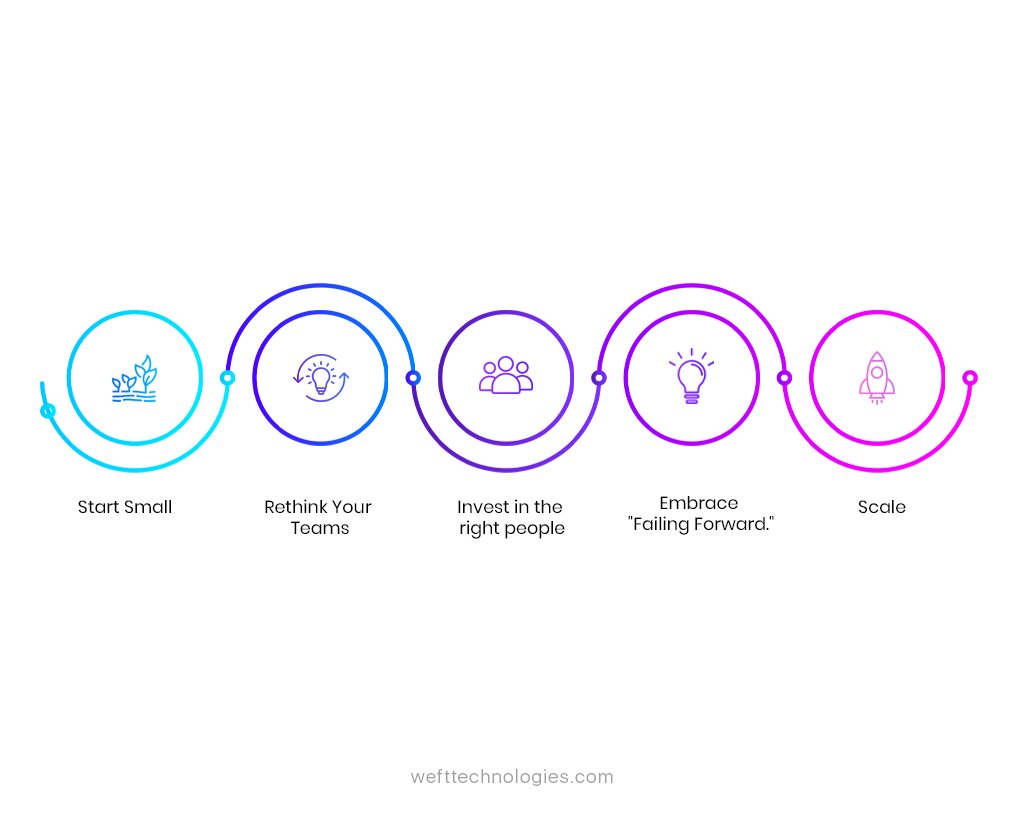
You can, in fact, start slow and small:
- Start Small. You don’t have to overhaul your entire company overnight. Pick one small, internal project and treat it like a product you are about to build. Create a dedicated team for it and give them the freedom to learn and experiment as they prefer.
- Rethink Your Teams. Instead of grouping people by what they do (e.g., “The Development Team”), form teams around a single product and use only as many employees as this product may require and might benefit from in the process of building, rather than having a bunch of people who may know nothing at all about the product. This way, everyone is aligned on the same goals.
- Invest in the right people. This new approach requires new skills. Do not just overhaul with employees of every kind or from every department because you’ll need people who are great at being a Product Owner—someone who can understand business needs and translate them for the development team.
- Embrace “Failing Forward.” With a product mindset, you’re always testing new ideas. Not all of them will work, and end failing miserably, and that’s okay. Treat small failures as valuable lessons or stepping stones that help you build a better product next time around.
Core Practices for Product-Centric Software Development
Building software as a product, not a project, demands more than just a mindset shift — it requires discipline, structure, and the right set of core practices. These practices ensure that your software doesn’t just launch successfully but continues to evolve, improve, and deliver value over time.
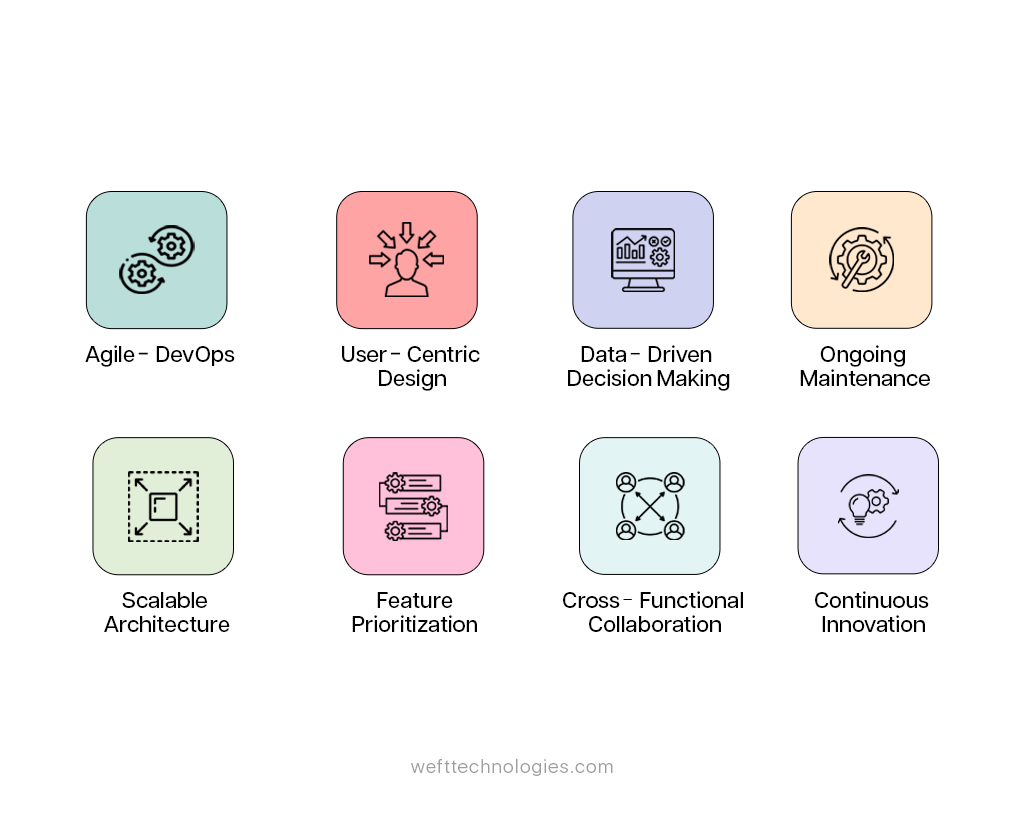
- Agile & DevOps: Iterative development, automated testing, and continuous integration/continuous delivery (CI/CD) pipelines ensure faster, safer, and more reliable releases.
- User-Centric Design: Continuous feedback loops and usability testing keep the product aligned with user needs.
- Data-Driven Decision Making: Analytics inform prioritization of features, resource allocation, and business strategy.
- Ongoing Maintenance & Support: Security updates, performance monitoring, and regulatory compliance become integral, not optional.
- Scalable Architecture: Modular design, APIs, and cloud-native infrastructure ensure long-term adaptability and integration with emerging technologies.
- Feature Prioritization & Roadmapping: Using metrics and user insights to determine development focus.
- Cross-Functional Collaboration: Teams from IT, operations, and business units actively participate in software evolution.
- Continuous Innovation: Incorporating AI, automation, and advanced analytics to enhance product capabilities.
Why Enterprises Must Think Like Product Owners
Here’s the deal. Viewing custom software as a product transforms enterprise thinking. Enterprises become active owners rather than passive recipients of a software solution. This mindset encourages:
- Continuous business value: Software evolves to meet emerging market and organizational needs.
- Proactive decision-making: Scalability, usability, and security are prioritized from day one.
- Alignment with enterprise strategy: Development efforts align with long-term goals rather than immediate deliverables.
- Strategic innovation: Enterprises can experiment with new features, AI integration, and automation without being locked into a static solution.
- Risk mitigation: Ongoing monitoring and updates reduce downtime and cyber risks.
How to Implement a Product Mindset in Your Enterprise
Attempting to build a product mindset cannot happen overnight. It takes a lot of thinking, planning, and bold steps to get there. Here are a few things that you might want to consider if you are planning to do so:
- Build internal product teams: Assign ownership for software lifecycle management.
- Develop a product roadmap: Focus on long-term goals and feature evolution rather than static deliverables.
- Foster cross-functional collaboration: Break silos between development, operations, and business units.
- Partner with the right vendors: Engage software providers who embrace custom software development, viewing it as a product, not just project delivery.
- Institutionalize metrics and KPIs: Track user engagement, system performance, and ROI continuously during product development.
- Invest in training: Equip teams with skills for Agile software development for enterprises and digital product development.
What Does the Future Hold for Software as a Continuous Product?
The future of enterprise software is continuous evolution:
- AI and automation: Smart systems optimize workflows and suggest proactive improvements.
- Low-code/no-code platforms: Enable faster feature deployment without compromising scalability.
- Predictive analytics: Reduce downtime, anticipate user needs, and inform strategic decisions.
- Enterprise software transformation: Software becomes a strategic asset, driving long-term software strategy and business value of custom software.
- Sustainability & compliance: Ongoing updates ensure adherence to changing regulations and ethical standards.
- Global scalability: Cloud-first, modular software supports enterprise expansion across geographies seamlessly.
Final Thoughts
Software evolution for enterprises can only be achieved once the question of Project vs product mindset is settled. And to do that, you need to know that the most successful enterprise software transformation doesn’t come along with the latest technology, but only with a fundamental change in perspective. By seeing your software as a living, breathing product with a future, you can build something that not only solves customer pain points but will give life to a product that is capable of and is also ready to grow and adapt for years to come.