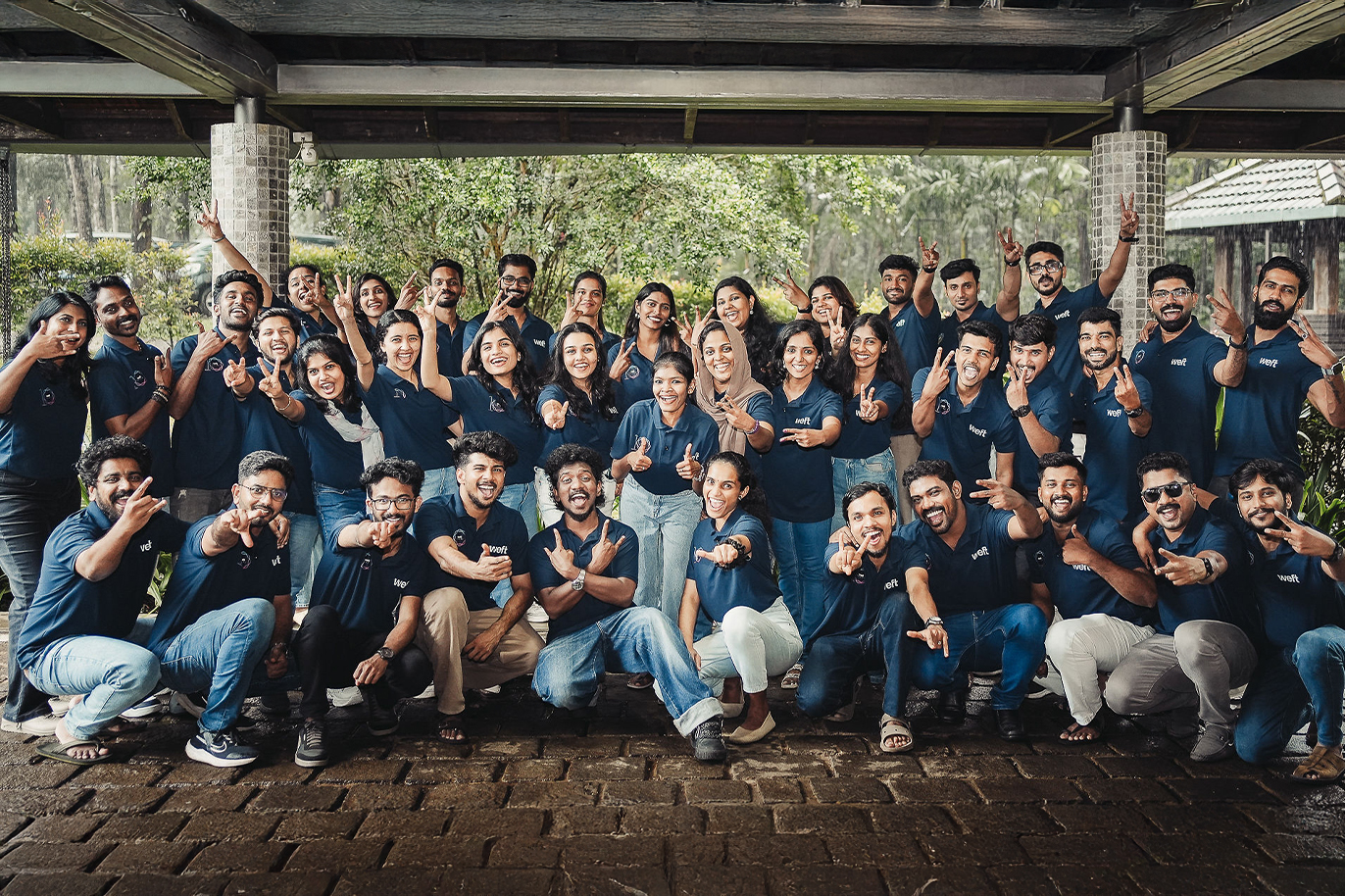


At Weft Technologies, we’ve always built with passion. But a while ago, something changed. We stopped building for stakeholders. We started building for users. And our products got better.
Now, this shift didn’t happen overnight. Like most development teams, we were caught in the loop of trying to satisfy everyone. This included clients, investors, and managers. The result? Bloated products, misaligned features, and teams constantly stretched too thin.
This blog is a look back at how we changed our approach to product strategy. And why that shift helped us build better, faster, and with more impact. If you’re a development team, tech leader, or founder trying to deliver products that actually work, this one’s for you.
Where We Were Going Wrong
Let’s be honest. When a stakeholder comes in with an idea, it’s hard to say no.
After all, they are the ones funding the project or signing off on the next release. So we did what many product teams do: we built what was asked. No questions. Just delivered.
The assumption was always that the stakeholder knows what’s best. But here’s the catch: stakeholders are not users. This is the most overlooked truth in product strategy and one of the main reasons products end up bloated, confusing, or ineffective.
The Difference Between Users and Stakeholders in Product Strategy
- Stakeholders focus on business goals, reports, market share, and metrics. On the other hand, users care about usability, outcomes, and how easily your product fits into their daily lives.
- Stakeholders might want dashboards with 20 metrics. On the other hand, users just want one metric that tells them what they need to know.
So, when your product roadmap is dictated by stakeholders, you lose the essence of user-centered design. Your product starts doing too much and helping too little.
Signs That You’re Building for Stakeholders, Not Users
This might have left you wondering if you’re in the same boat. Here are a few signs for you to recognize if you’re building for stakeholders, not users:
- Your backlog is filled with feature requests from sales or marketing.
- You keep building dashboards that no one uses.
- Onboarding takes too long because there are too many options.
- Your team is burned out shipping features that never get used.
We’ve been there. And if you’re there now, it’s okay. The key is to recognize it early and shift your approach.
How We Started Building For Users
- Changed Our Approach
- We made UX leadership a core part of our development process. Tech leadership in UX became everyone’s responsibility, not just the designers.
- We aligned our product discovery process around users, not just briefs. Every feature had to earn its place by showing value to the actual user.
- We also made one big shift in mindset. We decided to treat stakeholder requests as hypotheses, not facts.
- UX Leadership
UX is not a department. It’s a culture. Weft shifted from isolated design teams to cross-functional product pods. Designers, developers, and PMs work together from day one.
This tight alignment helps:
- Reduce rework
- Catch UX issues early
- Bring clarity to engineering
In essence, tech leadership in UX means developers think about flows, not just functions. PMs question the feasibility and outcome. Designers speak code.
Everyone owns the experience.
- Product Discovery
We placed product discovery at the front and center of everything. That means: Talk to users early. Test workflows. Ask real people how they’d use your solution. This doesn’t have to be a long process. Sometimes, a few user interviews or a quick prototype test are enough to validate or kill an idea.
In short, if a stakeholder has a feature idea, we map it to user problems first. If it doesn’t solve a real problem, it doesn’t get built.
- Product Feature Prioritization
Earlier, we used to prioritize based on who shouted the loudest. Now, we use a mix of prioritization models to decide what to build. These include:
- Impact vs Effort Matrix – Helps us focus on high-value, low-effort wins.
- MoSCoW Method – Helps split features into Must-haves, Should-haves, Could-haves, and Won’t-haves.
- User Story Mapping – Helps visualize the end-to-end journey and find gaps.
- Feature Priority Matrix – Helps categorize features by value vs. effort.
- Eisenhower Matrix – Helps sort features based on urgency and importance.
- Kano Model – Helps understand features’ impact on customer satisfaction.
These tools are not magic. But they bring objectivity into feature prioritization.
The biggest change, however, is this:
We ask, ‘Does this improve the user’s outcome?’
We DO NOT ask, ‘Does this satisfy the stakeholder?’
Let’s simplify this a bit more. There is a framework that we use for product feature prioritization. So, if you want to prioritize the right product features, just follow this loop:
- Start with a clear user problem
- Map out current workflows or behavior
- Generate feature ideas that solve the core problem
- Estimate impact (on user) and effort (on dev)
- Validate with actual users
- Build, test, and refine
This loop keeps your product grounded in user reality. Not internal politics.
The Result – Product-Led Growth
By putting users at the center, something amazing happened. We stopped chasing users, and they started referring us.
This is what product-led growth looks like:
- Users discover your product.
- They try it.
- They get value quickly.
- Then they bring others.
Think about it, you don’t need large sales teams when your product does the selling.
A Real Example – Rebuilding Our Internal Logistics Tool
We recently reexamined one of our internal logistics management tools.
Earlier, the tool was stakeholder-designed. Complex filters. Custom exports. Manual entry screens. Most users would never be fully satisfied with these. So, we flipped the strategy.
- We talked to the dispatchers and logistics team who used the tool daily
- Removed 40% of features that added no value
- Focused on the key workflows.
- Simplified the interface.
- Made all forms dynamic and auto-filled based on previous data.
And the result?
- Task completion time dropped by 60%
- Training time cut by half
- User satisfaction went up
- And yes, stakeholders loved it. Because it actually worked.
We hope that painted you a clear picture of what product-led growth looks like.
What Founders Should Know
Founders often fall into one of these traps:
- Assuming they know what users want
- Letting internal teams overbuild
So if you’re a founder facing these issues, we have some very specific pointers for you that’ll help you in the long run:
- Your users don’t care about stakeholder KPIs, what they care about is whether your product helps them. So push for user validation before greenlighting ideas.
- Fund product discovery, not just delivery.
- Good UX drives growth better than a long feature list.
- A lean, user-tested product is better than a bloated, stakeholder-approved one.
So, trust your team to push back when needed. Let them lead product discovery and support product strategies that start with real user problems.
Final Takeaway
When your product strategy starts with the user, everything else naturally falls into place:
- Your developers work smarter.
- Your design team finds clarity.
- Your product launches faster.
- Your users stay longer.
And most importantly, your team builds with pride.
So if you’re caught in the trap of building for every stakeholder request, pause. Ask your team one simple question: ‘Does this help the user?’
If not, maybe it doesn’t need to be built. Because the best products aren’t the ones with the most features. They’re the ones that solve real problems, for real people.

We are here to help you with growth
Contact Our ExpertsLatest Blogs
- The Marketing Funnel Doesn’t End at Your Website Anymore
- Brand Visibility in the Age of AI Search: A Practical Guide for Businesses
- Digital Product Development in 2026: Strategies for Building Products That Actually Succeed
- The AI App Explosion: Why Low-Cost Development Won’t Fix a Broken Business Strategy